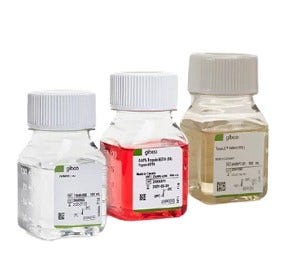
Dissociationsreagenser
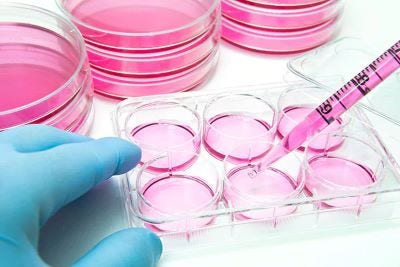
Dissociationsreagenser bruges til at adskille celler fra overfladesubstrater og fra andre celler. Vælg mellem dissociationsreagenser i forskellige former, såsom flydende, fast eller frosset, til forskellige celletyper eller med eller uden tilsætningsstoffer, afhængigt af dine behov.

Nyttige links
Spar nu – eksklusive tilbud

Produktkode 7058026

Produktkode 4919324

Produktkode 12093745

Produktkode 10684033

Produktkode 10738473

Produktkode 11510536

Produktkode 12569069

Produktkode 11530456

Produktkode 15323721


Produktkode 10780004

Produktkode 15313661
Must-have

Produktkode 11599686

Produktkode 10779413

Produktkode 4919329

Produktkode 4919325

Produktkode 7076308
Produktkode 11530456

Produktkode 11420705

Produktkode 15323609
Gennemfør din bestilling – fantastiske tilbud
FAQ
Et dissociationsreagens er et kemisk stof, der anvendes til at nedbryde eller adskille komplekse biologiske strukturer i deres individuelle bestanddele. Disse reagenser anvendes almindeligvis i forskellige laboratorieprocedurer til at dissociere celler, væv eller molekylære komplekser. Her er nogle eksempler og deres anvendelser:
Celledissociation
- Trypsin: Et enzym, der anvendes til at dissociere adhærente celler fra dyrkningsoverflader og fra hinanden ved at nedbryde proteiner
- Kollagenase: Et enzym, der nedbryder kollagen i væv og anvendes til at isolere celler fra vævsprøver
Dissociation af proteinkomplekser:
- Detergenter (f.eks. SDS, Triton X-100): Anvendes til at solubilisere og dissociere proteinkomplekser ved at forstyrre hydrofobe interaktioner
- Urinstof eller guanidinhydrochlorid: Stærke denatureringsmidler, der anvendes til at dissociere protein-protein-interaktioner ved at forstyrre hydrogenbindinger og hydrofobe interaktioner
Dissociation af nukleinsyrer:
- Formamid: Anvendes til at denaturere nukleinsyrer ved at forstyrre hydrogenbindinger mellem basepar
- Alkaliske opløsninger (f.eks. NaOH): Anvendes til at denaturere DNA ved at bryde hydrogenbindinger
Trypsin og EDTA anvendes almindeligvis sammen til at dissociere adhærente celler i cellekultur. Her er, hvordan hver af dem virker:
Trypsin er et proteolytisk enzym, der nedbryder proteiner. Det spalter specifikt peptidbindinger på carboxylsiden af aminosyrerne lysin og arginin. Når trypsin tilsættes til en cellekultur, nedbryder det de proteiner, der medierer celle-celle- og celle-matrix-adhæsion, hvorved cellerne effektivt løsnes fra dyrkningsoverfladen og fra hinanden.
EDTA (ethylendiamintetraeddikesyre) er et kelerende stof, der binder divalente metalioner såsom calcium og magnesium. Disse metalioner er essentielle for funktionen af celleadhæsionsmolekyler (CAM) såsom integriner og cadheriner. Ved at kelere disse ioner forstyrrer EDTA CAM'ernes funktion, svækker celle-celle- og celle-matrix-interaktioner og øger trypsins virkning.
EDTA anvendes ofte sammen med trypsin i en trypsin-EDTA-opløsning. EDTA svækker først celleadhæsionen ved at chelatere calcium- og magnesiumioner, hvorefter trypsin yderligere nedbryder adhæsionsproteinerne og dermed letter en effektiv celledissociation. Anvendelsen af trypsin og EDTA sammen sikrer en effektiv og skånsom dissociation af adhærente celler, minimerer beskadigelse og opretholder cellelevedygtigheden.
Når du vælger dissociationsreagenser til cellekultur eller vævsdissociation, skal du tage følgende i betragtning:
- Forskellige celletyper og væv har varierende følsomhed og strukturel sammensætning. Vælg reagenser, der er egnede til den specifikke celle- eller vævstype, du arbejder med.
- Sørg for, at dissociationsprocessen bevarer cellernes levedygtighed og funktionalitet. Nogle reagenser kan være for aggressive for visse celler, hvilket kan påvirke deres efterfølgende vækst eller adfærd.
- Vurder reagensets effektivitet til at dissociere celler inden for en rimelig tidsramme. Ineffektiv dissociation kan føre til forlænget eksponering, hvilket potentielt kan skade cellerne.
- Overvej, hvordan dissociationsreagenset kan påvirke efterfølgende eksperimenter eller anvendelser. Nogle reagenser kan efterlade rester eller ændre celleoverflademarkører, hvilket kan påvirke efterfølgende processer som flowcytometri, cellesortering eller molekylære analyser.
- Vurder reagensets sikkerhed og brugervenlighed. Nogle reagenser kan være giftige eller kræve særlige forholdsregler ved håndtering. Sørg for, at der er etableret passende protokoller for sikker anvendelse.
Ressourcer og relateret information
Topmærker