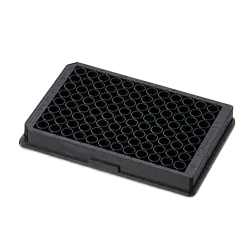
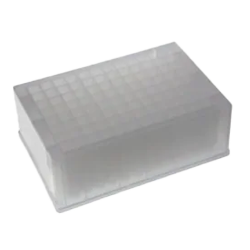
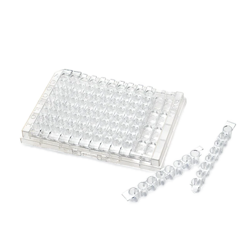
Mikroplader til overfladebindingsanalyser
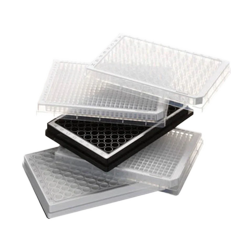
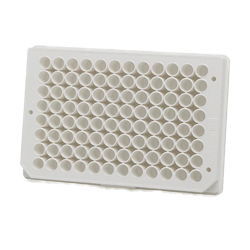
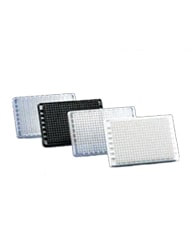
Analyseplader med forskellige overfladebehandlinger og bindingstyper fremmer ikke-specifik adsorption af antistoffer, proteiner eller andre biomolekyler til overfladen for kvantitative analyser såsom ELISA. Vælg mellem sterile, ikke-sterile, flad-, U- eller V-bund, forskellige formater og farver afhængigt af dine behov.

Nyttige links
Spar nu – eksklusive tilbud

Produktkode 4555271

Produktkode 4525218

Produktkode 4525233

Produktkode 4830335

Produktkode 4555268

Produktkode 4555267

Produktkode 4830833
Produktkode 11329163

Produktkode 152658

Produktkode 10366281
Produktkode 8601007

Produktkode 10009572
Must Have

Produktkode 152852

Produktkode 4830835

Produktkode 4830454

Produktkode 10192781

Produktkode 4555270

Produktkode 4830986

Produktkode 3816208

Produktkode 17770698
Fuldfør din ordre – gode tilbud

Produktkod 4525142

Produktkod 4525186

Produktkod 4918919
Ofte stillede spørgsmål
Mikroplader til overfladebindingsanalyser bruges til immobilisering af biomolekyler såsom proteiner, nukleinsyrer eller celler på brøndenes overflade, hvilket muliggør forskellige typer analyser, herunder ELISA, cellebaserede analyser, studier af protein-protein-interaktioner og nukleinsyrehybridiseringsanalyser.
Forskellige brøndformer i mikroplader til overfladebindingsanalyser er optimeret til forskellige metoder og anvendelser. Valg af den rette brøndform sikrer optimal ydeevne.
Fladbundede brønde: Ideelle til absorbansbaserede analyser (f.eks. ELISA) og cellekultur.
Årsag: giver en ensartet overflade til cellebinding og en konsistent optisk vej til absorbansmålinger.
Rundbundede brønde: Velegnede til suspensionscellekultur, blanding og centrifugering.
Årsag: muliggør bedre blanding og pelletering af celler eller partikler under centrifugering.
V-bundede brønde: Bedst til analyser, hvor effektiv prøveopsamling er vigtig, såsom pelletering af celler eller partikler.
U-bundede brønde: Anvendes ofte til agglutinationsanalyser og visse typer cellekultur.
Årsag: Den afrundede form gør det lettere at visualisere agglutination og sikrer ensartet bundfældning af celler.
Når du vælger mikroplader til overfladebindingsanalyser, bør du overveje følgende fem faktorer:
- Overfladekemi: Mikropladens overfladekemi skal være kompatibel med de biomolekyler, du ønsker at binde. Forskellige belægninger (f.eks. polystyren, glas eller specialbelægninger som streptavidin) tilbyder varierende bindingsaffinitet for proteiner, nukleinsyrer eller celler.
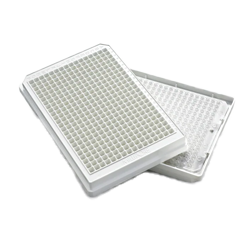
- Brøndformat: Vælg det passende brøndformat (f.eks. 96-, 384- eller 1536-brønds plader) baseret på gennemløbskravene i din analyse.
- Optiske egenskaber: Sørg for, at mikropladen har passende optisk klarhed og minimal baggrundsfluorescens eller absorbans til din detektionsmetode (f.eks. fluorescens, absorbans eller luminescens).
- Bindingskapacitet: Vælg en mikroplade med en bindingskapacitet, der matcher behovene i din analyse, for at sikre optimal ydeevne.
- Instrumentkompatibilitet: Kontrollér, at mikropladen er kompatibel med det udstyr, der anvendes til detektion og analyse i dit laboratorium.
Ressourcer og relateret information


Shop efter brand